
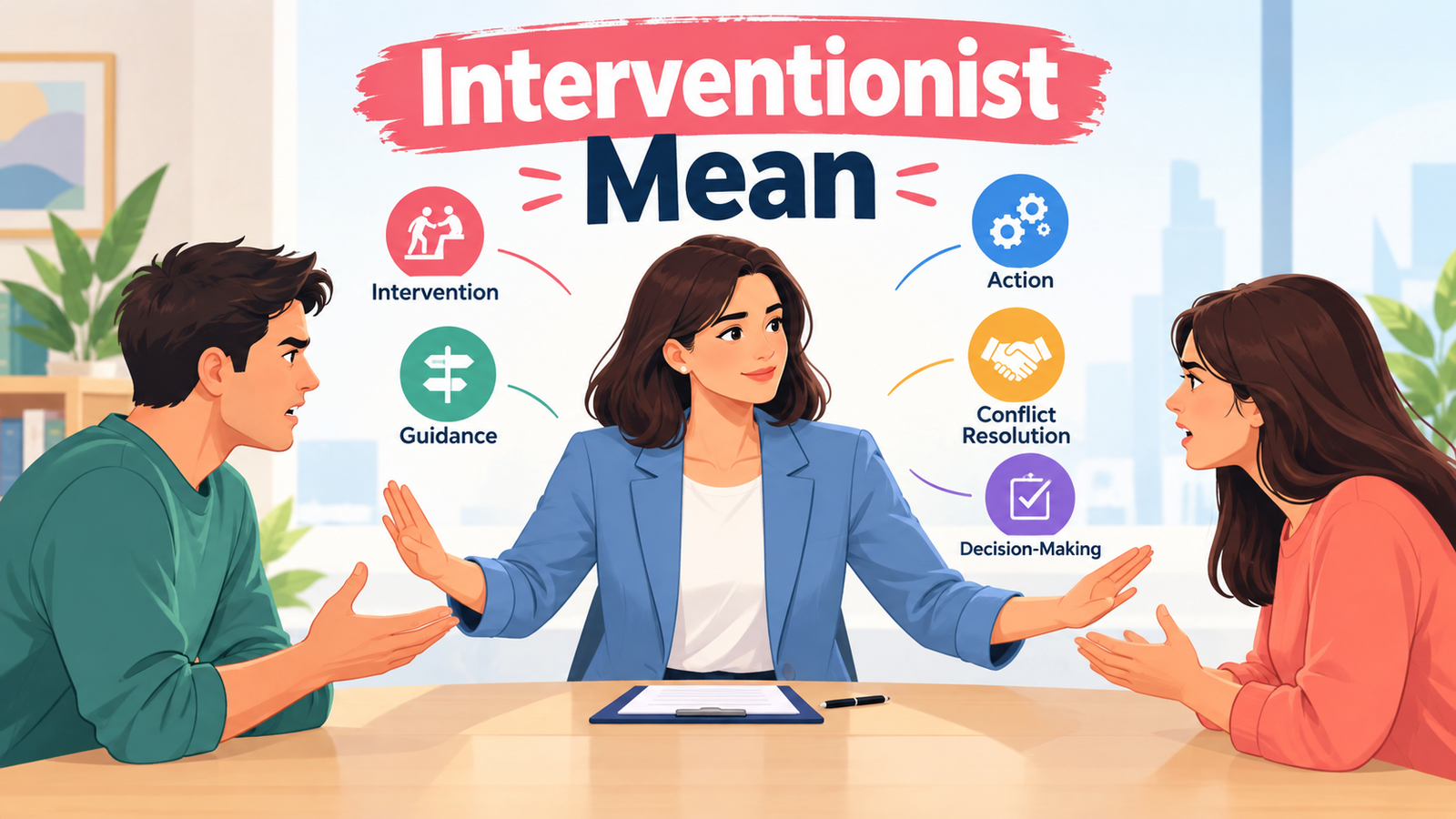

An interventionist is a person who intervenes in a situation, either to change its outcome or to prevent harm. The word has two common uses in American English. In a general or political sense, an interventionist is someone who supports active involvement in other countries’ affairs, often through military, economic, or diplomatic action. In healthcare and family settings, an interventionist is a trained professional who helps organize and guide an intervention for someone struggling with addiction, mental illness, or another serious behavioral issue.
Most people searching this term are trying to understand the second meaning, since it’s the one that comes up when a family is dealing with a loved one’s substance use. This article covers both definitions, then focuses on what an intervention specialist actually does, when families need one, and how to choose the right person for the job.
The General Definition of Interventionist
In its broadest sense, “interventionist” describes a person, policy, or belief system built around intervention rather than staying neutral or hands-off. Merriam-Webster defines the term as relating to intervention, particularly in international affairs, where an interventionist government or thinker favors direct involvement in another nation’s conflicts, economy, or governance.
This usage appears mostly in political science, history, and foreign policy discussions. An “interventionist foreign policy,” for example, refers to a country’s willingness to use military force or diplomatic pressure to influence events beyond its own borders, as opposed to an isolationist stance that avoids such involvement.
Outside of politics, the word can describe anyone who steps in to change a course of events, from a teacher intervening in a classroom conflict to a manager addressing a workplace problem before it escalates.
Interventionist in Addiction and Mental Health Care
In the addiction and mental health field, an interventionist is a trained professional hired by a family to plan, organize, and lead a structured conversation aimed at getting someone into treatment. This is the meaning behind terms like “addiction interventionist,” “intervention specialist,” or “drug and alcohol interventionist.”
An intervention itself is a planned meeting where family members and close friends express concern about a loved one’s substance use or behavior and encourage them to accept treatment. Without professional guidance, these conversations often become emotional, defensive, or unproductive. An interventionist’s job is to prevent that from happening.
What Does an Interventionist Actually Do?
An interventionist manages the entire intervention process from start to finish, not just the meeting itself. Their responsibilities typically include:
Assessing the situation. They gather information about the person’s substance use, mental health history, and family dynamics before deciding on an approach.
Preparing the family. They coach participants on what to say, how to say it, and how to stay calm if the conversation becomes tense.
Choosing an intervention model. Approaches like the Johnson Model or the Systemic Family Intervention model shape how the meeting is structured and who takes part.
Facilitating the meeting. During the intervention, the specialist keeps the discussion focused, non-confrontational, and productive.
Coordinating treatment placement. If the person agrees to get help, the interventionist often has treatment options ready and helps arrange admission immediately, since delays can lead to second thoughts.
Supporting the family afterward. Many interventionists stay involved during early recovery, helping the family set boundaries and avoid enabling behaviors, regardless of whether the person accepted treatment.
The end goal is always the same: move someone from resistance toward accepting help, while protecting the family’s wellbeing along the way.

When Should a Family Consider Hiring an Interventionist?
Not every difficult conversation requires a professional. Families typically bring in an interventionist when:
Previous attempts to talk about the problem have failed or led to conflict
The person shows denial, defensiveness, or refuses to acknowledge the issue
There’s a risk of the situation escalating into anger or estrangement
The family isn’t sure how to structure the conversation or choose the right treatment program
Co-occurring mental health conditions make the situation more complex
The family wants a neutral third party who isn’t emotionally entangled in the relationship
A professional interventionist brings clinical training and objectivity that family members, however well-meaning, usually can’t provide on their own.
Interventionist vs. Therapist vs. Counselor
These roles overlap but aren’t the same thing.
| Role | Primary Focus | Typical Timeline |
| Interventionist | Getting a resistant individual into treatment | Short-term, centered on one event and its immediate aftermath |
| Therapist | Ongoing mental health treatment and coping strategies | Long-term, often months or years |
| Addiction Counselor | Substance use treatment and recovery planning | Medium to long-term, usually during and after treatment |
An interventionist’s work is front-loaded and time-limited. Once someone enters treatment, ongoing care shifts to therapists, addiction counselors, and medical staff. Some professionals hold credentials in more than one of these areas, which is why interventionists sometimes continue supporting the family into early recovery.
Credentials and Qualifications to Look For
Interventionist isn’t a single licensed title in the way “psychologist” or “physician” is, so credentials vary. When evaluating a candidate, look for one or more of the following:
Certified Intervention Professional (CIP), credentialed through the Association of Intervention Specialists
Licensed Clinical Social Worker (LCSW) or Licensed Professional Counselor (LPC)
Certified Alcohol and Drug Counselor (CADC) or a state-equivalent addiction counseling license
A background in psychology, social work, or addiction studies
Direct experience running interventions, not just general counseling experience
Because state requirements differ, always ask a candidate about their specific credentials and how many interventions they’ve personally led.
How to Choose the Right Interventionist
Since this is a decision most families make only once, under stress, it’s worth vetting candidates carefully. Consider:
Experience with your specific situation. Someone experienced with opioid addiction may not be the best fit for a case involving alcohol and a co-occurring eating disorder, or vice versa.
Intervention model and approach. Ask what method they use and why they think it fits your family.
Communication style. You’ll be working closely with this person under pressure, so a good rapport matters.
Post-intervention support. Find out whether they help with treatment placement and travel logistics, and whether they follow up afterward.
References and track record. Ask for references from past clients or the treatment centers they work with regularly.
What Does Hiring an Interventionist Cost?
Costs vary widely depending on the interventionist’s experience, location, and whether travel is involved, and can range from roughly $2,000 to over $10,000 for a full intervention package. Some professionals charge a flat fee that includes planning sessions, the intervention itself, and travel to treatment; others charge hourly for preparation and a separate fee for the day of the event. Because pricing isn’t standardized, get a detailed, written breakdown of what’s included before hiring anyone.
Health insurance rarely covers interventionist fees directly, though it may cover the treatment program the person enters afterward. It’s worth asking any interventionist you’re considering whether they can help verify insurance benefits for the next step.
FAQs
Is an interventionist the same as a therapist?
No. A therapist provides ongoing mental health treatment, while an interventionist focuses specifically on organizing and leading the intervention event and getting someone into treatment.
Do interventionists need a license?
There’s no single national license for the title “interventionist,” but most reputable professionals hold a related credential, such as CIP, LCSW, LPC, or CADC.
How long does an intervention take to plan?
Planning can take anywhere from a few days to a few weeks, depending on the family’s readiness, the interventionist’s availability, and how quickly treatment placement can be arranged.
Can an intervention happen without a professional interventionist?
Yes, but success rates and emotional outcomes tend to improve with professional guidance, since a trained specialist can manage conflict and keep the conversation focused on treatment.
What happens if the person refuses treatment?
A skilled interventionist prepares the family for this possibility in advance, often by setting clear boundaries the family will follow regardless of the outcome.
Conclusion
An interventionist means different things depending on context, but for most families researching the term, it refers to a trained professional who plans and leads a structured intervention to help a loved one accept treatment for addiction or a mental health condition. Choosing the right one comes down to credentials, experience with your specific situation, and a clear plan for what happens after the conversation ends.