

Alternative Learning System (ALS) is a Philippine education pathway designed for people who cannot or did not complete basic education through the regular school system. It provides flexible ways to develop literacy, complete equivalent basic education, and continue toward work, further education, or other goals.
What Does Alternative Learning System Meaning Refer To?
In the Philippines, Alternative Learning System means a parallel learning system that provides educational opportunities outside the traditional formal school setting. It is administered within the Philippine basic education system and is intended especially for out-of-school children in special cases, youth, and adults who need another pathway to basic education.
The key idea is flexibility. ALS can adapt learning to a learner’s circumstances instead of requiring everyone to follow the same daily classroom routine. Current national guidelines describe ALS as a system for developing basic and functional literacy skills and providing equivalent pathways for completing basic education.
ALS is not simply homeschooling, online school, tutoring, or a private alternative school. It is a recognized public education pathway with its own curriculum, assessment, learning arrangements, and implementation rules.
Why Was the Alternative Learning System Created?
ALS exists because access to traditional schooling is not equal for every learner. A person may leave school because of economic, geographic, social, cultural, political, family, work, disability-related, or other circumstances. Some learners may also live in places where regular schooling is difficult to access.
Instead of treating leaving formal school as the end of education, ALS creates another route back into learning. The Philippine Department of Education describes it as a second-chance education program that allows learners to study in ways, places, and schedules suited to their circumstances.
This purpose also explains why ALS is broader than a dropout program. The current legal framework includes adults and out-of-school children in special cases, including learners affected by barriers such as disability, emergencies, or other difficult circumstances.
Who Can Use Alternative Learning System?
ALS primarily serves out-of-school learners who need basic education or literacy opportunities. Under the ALS Act and current DepEd guidance, eligible groups include adults and out-of-school children in special cases, with youth also forming an important part of the program.
The exact eligibility and local arrangements can vary, so learners should confirm current requirements with the appropriate DepEd Schools Division Office or Community Learning Center.
ALS may be especially relevant to someone who wants to return to education after leaving school, needs a flexible learning schedule, or cannot participate consistently in a conventional classroom.
How Does the Alternative Learning System Work?
ALS combines structured learning with flexible delivery. Learners may receive instruction through Community Learning Centers and other approved arrangements, while learning resources and assessment are used to track progress.
The program emphasizes competencies, learner progress, assessment, flexible modalities, and recognition of prior learning.
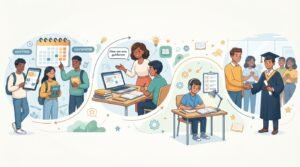
A typical pathway may involve these stages:
- The learner connects with an ALS implementing center or education office.
- The program identifies the learner’s educational needs and existing competencies.
- The learner follows an appropriate learning plan and uses ALS learning resources.
- Progress is assessed against required competencies.
- The learner works toward the relevant literacy or Accreditation and Equivalency pathway.
- After meeting applicable requirements, the learner can pursue the next education, training, or employment step available to them.
Local ALS providers can confirm current enrollment and assessment details.
What Programs Are Included in ALS?
The main ALS components cover different educational needs rather than placing every learner into one course.
Basic Literacy Program
The Basic Literacy Program, or BLP, focuses on foundational literacy, including reading, writing, and numeracy. It is intended primarily for learners who need to build these basic skills before progressing to other educational pathways.
Accreditation and Equivalency Program
The Accreditation and Equivalency, or A&E, Program provides an alternative route for learners who have basic literacy skills but did not complete formal basic education. It is designed to help eligible learners work toward equivalent elementary or junior high school outcomes through ALS.
BLP and A&E are core non-formal education programs within ALS, while informal education can support additional life, work, and community learning.
Is ALS the Same as Regular School?
No. ALS and regular formal schooling are different pathways, but both are connected to basic education.
| Alternative Learning System | Regular Formal School |
| Flexible learning arrangements | Usually follows a regular school schedule |
| Designed for specific out-of-school learner needs | Designed for students enrolled in the formal system |
| May use Community Learning Centers and other approved settings | Primarily delivered through schools |
| Uses ALS-specific curriculum and assessment arrangements | Uses the formal school curriculum and school-based processes |
| Can provide alternative pathways toward basic education completion | Provides the standard formal route |
The key difference is how learning is organized and delivered.
What Are the Benefits of Alternative Learning System?
The main benefit of ALS is access to education for people whose circumstances make traditional schooling difficult.
Its flexible structure can help learners balance education with work, family responsibilities, location constraints, or other barriers. It can also create a route for people who stopped studying years earlier and now want to continue.
Another important feature is skills development. The enhanced ALS framework connects basic education with competencies, life skills, work readiness, and possible transitions into further education, technical-vocational training, or employment.
For a learner considering ALS, the useful question is whether the pathway fits current circumstances and educational goals. ALS still involves learning, assessment, and demonstrated competencies.
What Is the Current ALS Update in 2026?
The Philippines introduced new implementing guidelines for the Enhanced Alternative Learning System in January 2026. DepEd Order No. 001, s. 2026 updates ALS implementation and aligns the program with the department’s revised basic education curriculum.
The updated framework includes learning modalities, micro-certification, recognition of prior learning, and stronger links to work readiness. DepEd states that the revised ALS curriculum for the Basic Literacy Program and A&E elementary and junior high school programs begins implementation in School Year 2026–2027.
Because older pages may describe earlier versions, check current DepEd information for eligibility, curriculum, assessment, and availability.
Does “Alternative Learning” Mean the Same Thing in the United States?
Not necessarily. In the United States, “alternative learning” is often a broad term for programs that differ from a traditional school model, and the meaning depends on the state.
For example, Washington uses Alternative Learning Experience, or ALE, for public education in which some or all instruction occurs outside a regular classroom schedule. Minnesota uses “alternative education” for state-approved options for students experiencing difficulty in traditional schooling.
This distinction prevents confusion when search results mix Philippine ALS information with U.S. alternative education terminology.
Therefore, a U.S. reader searching for “alternative learning system meaning” should first identify the location being discussed. If the phrase is capitalized as “Alternative Learning System” and appears with DepEd, ALS Act, or Philippine education terms, it almost certainly refers to the Philippines. If it appears on a U.S. state education website, it may refer to a completely different program.
Is Alternative Learning System a Good Option for You?
ALS may be relevant if you need a recognized alternative to conventional school attendance and your circumstances fit the program’s eligibility rules. It can provide a flexible route for returning to education without requiring every learner to follow the same schedule or setting.
Before enrolling, verify four practical details: eligibility, the level or program available, the learning arrangement offered locally, and the assessment or completion requirements. These details can change with policy and local implementation.
For Philippine learners, the safest starting point is the Department of Education or an authorized Community Learning Center. For U.S. learners, contact the relevant state, district, or school program because “alternative learning” can have a different legal and educational meaning.
Frequently Asked Questions
Is Alternative Learning System only for school dropouts?
No. ALS also serves adults and out-of-school children in special cases who face barriers to formal schooling. Its purpose is broader than simply helping former students return to school.
Is ALS free in the Philippines?
ALS is a public education program implemented by DepEd and approved partners, but specific services and arrangements can vary. Confirm current enrollment details with the local ALS office or Community Learning Center.
Can ALS help someone complete basic education?
Yes. The ALS framework includes alternative pathways for completing basic education through appropriate literacy and Accreditation and Equivalency programs.
Is ALS the same as online learning?
No. Online learning can be one delivery method in education, while ALS is a broader education system with its own curriculum, assessment, and implementation framework. ALS learning does not automatically mean studying entirely online.
What does ALS stand for in education?
In the Philippine context, ALS stands for Alternative Learning System. In other countries or states, the same acronym or similar phrase may refer to something different.
The Key Meaning of Alternative Learning System
The clearest alternative learning system meaning is this: ALS is the Philippines’ parallel basic education pathway for eligible out-of-school learners who need flexible ways to build literacy or complete basic education. Its value comes from combining recognized education goals with learning arrangements that can better fit different life circumstances.
Because ALS rules and curriculum have been updated for 2026, older explanations may no longer give the full picture. Anyone considering the program should use current DepEd guidance and confirm local requirements before making enrollment decisions.
Other Meanings posts