
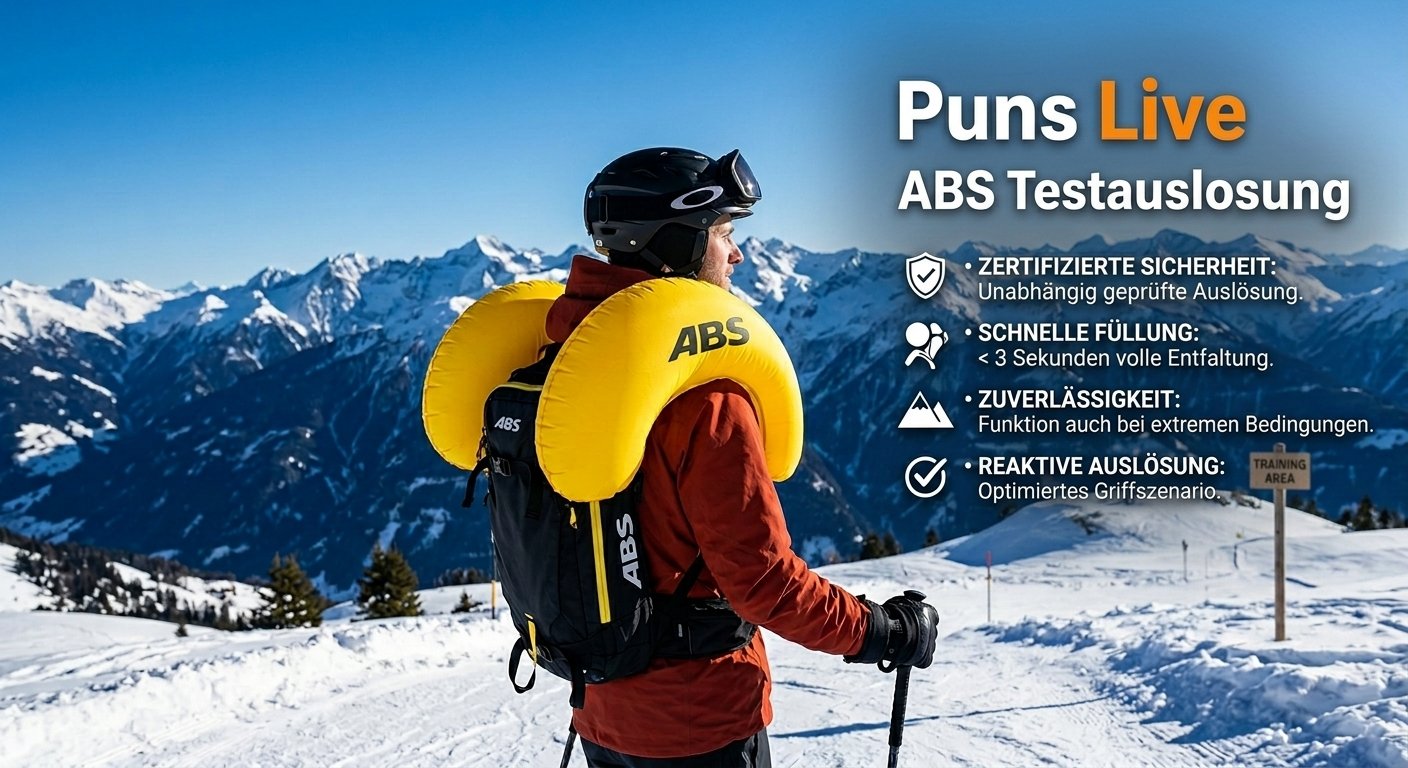

ABS Testauslösung refers to the controlled testing or training deployment of an ABS avalanche airbag. Before heading into the mountains, users need to understand how their system works, when testing is recommended, and what must be checked afterward. A successful test can help confirm the system’s function and make the activation movement more familiar, but the correct procedure depends on the exact model. This guide explains the key differences, essential precautions, maintenance requirements, and common mistakes to avoid before your next winter adventure.
What Is ABS Testauslösung?
The German word Testauslösung means test activation or test deployment. In the context of ABS avalanche backpacks, it describes deliberately activating the airbag system under controlled conditions to check its operation and practise using the release handle.
An avalanche airbag is designed to help reduce the risk of complete burial if its wearer is caught in moving snow. When activated, the system releases gas into the airbag, which inflates rapidly and increases the wearer’s overall volume.
ABS Testauslösung serves two main purposes. It allows users to check the equipment’s function through an approved deployment and become familiar with the movement required to activate it. However, testing cannot guarantee that the equipment will work in every emergency or eliminate avalanche hazards.
Why Is an ABS Testauslösung Important?
In an avalanche emergency, there may be very little time to react. Knowing where the release handle is located and how it feels can help users become more familiar with the activation movement before entering avalanche terrain.
A proper test can also reveal problems that may otherwise go unnoticed. Damaged components, an unsuitable cartridge, or an incorrectly prepared mechanism can affect the system’s readiness.
ABS recommends a training deployment with a filled cartridge before each winter season. This provides an opportunity to check the system and practise the activation movement. A visual inspection remains useful, but it cannot replace a full deployment when the manufacturer recommends one.
ABS EASYTECH vs. SOLID: What Is the Difference?
ABS has produced different avalanche airbag systems, and their activation mechanisms do not all work in the same way. Identifying your exact model is essential before attempting a test.
| Feature | ABS EASYTECH | ABS SOLID |
| Activation method | Mechanical trigger mechanism | Pyrotechnically initiated mechanism |
| Full deployment | Uses the appropriate filled cartridge | Follows its model specific deployment procedure |
| Trigger practice | Supports cartridge free practice when performed as instructed | Do not assume the same practice method is supported |
| Main precaution | Follow the activation and reset instructions | Follow the specific SOLID manual and service requirements |
EASYTECH allows users to practise the trigger movement without deploying the airbag when the system is correctly prepared according to its instructions. A full deployment is different because it activates the inflation process.
SOLID uses a different triggering mechanism, so procedures designed for EASYTECH must not automatically be applied to it. Older systems may also have requirements that differ from newer equipment. If you cannot identify your model or find its instructions, contact ABS or an authorised service provider before proceeding.
How to Prepare for an ABS Testauslösung
Preparation helps prevent avoidable mistakes and protects the equipment during testing.
Identify your exact model. Check the product label and documentation to establish which activation system your backpack uses.
Inspect the backpack. Look for damaged stitching, worn straps, faulty buckles, tears, or visible damage to the airbag compartments and other components.
Check the cartridge. Follow the manufacturer’s instructions for verifying cartridge type, condition, and fill status. Do not assume that a cartridge is serviceable simply because it looks normal.
Choose a suitable location. Use an area with enough clear space for the airbag to inflate without hitting people, sharp objects, furniture, or other obstacles. Keep bystanders away from the deployment area.
Read the model specific instructions. Confirm the approved procedure before touching the activation mechanism. Do not improvise with tools, cartridges, replacement parts, or reset methods.
If you notice damage or uncertainty about the equipment, stop and seek professional guidance instead of attempting a test.
Full Deployment vs. Cartridge Free Practice
These two activities have different purposes and should not be confused.
A full deployment uses the appropriate filled cartridge and activates the airbag inflation system. It allows the user to observe the deployment and check the equipment’s behaviour during activation. Because the deployment uses the cartridge charge, the system must be restored according to the manufacturer’s instructions before it can be relied upon again.
Cartridge free practice is available on compatible EASYTECH systems. It helps users rehearse the handle movement and receive feedback from the trigger mechanism without inflating the airbag. The mechanism must be correctly prepared and reset as directed by the manual before another practice activation.
| Test type | Main purpose | Important limitation |
| Full deployment | Check the deployment and inflation process | Requires the approved cartridge and proper restoration afterward |
| Cartridge free practice | Practise the release movement | Does not verify the complete inflation process |
Neither method should be substituted for the other when the manufacturer specifies a particular test. Never use an unapproved procedure on an unfamiliar system.
What Should You Check After a Test Deployment?
After a full ABS Testauslösung, check the equipment before considering it ready for another trip.
Inspect the airbag fabric, seams, compartments, straps, buckles, and visible activation components for damage. If the airbag does not deploy as expected or any part appears damaged, do not rely on the system until the problem has been assessed.
The cartridge and triggering mechanism may also need replacement, refilling, or other approved service work. The requirements depend on the model and the type of activation performed. Follow the manufacturer’s instructions for deflation, folding, resetting, and preparing the system for use again.
Never assume that repacking the backpack makes it ready for an emergency. Confirm that every required component is correctly restored before returning the equipment to service.
How Often Should You Test and Service an ABS Airbag?
ABS recommends a training deployment with a filled cartridge before each season. This helps users check the system and practise the release movement before regular winter activities begin.
Professional maintenance is a separate requirement. ABS recommends a general system check approximately every three years in its FAQ, while its service guidance also discusses comprehensive checks after three to five seasons depending on use. The appropriate interval depends on the equipment, its condition, and the applicable manufacturer guidance.
A full inspection is particularly important after an avalanche deployment, significant impact, or suspected malfunction. If you own an older or second hand backpack, confirm its service history, model compatibility, and current serviceability before relying on it.
Keep a simple record of deployments, cartridge replacements, inspections, and professional servicing. This makes it easier to track maintenance and prepare the equipment for the next season.
Common ABS Testauslösung Mistakes to Avoid
Several avoidable mistakes can leave an avalanche airbag improperly prepared.
Using instructions for the wrong model. EASYTECH, SOLID, and older systems may have different activation and reset requirements.
Confusing practice with a full test. Cartridge free trigger practice does not establish that the entire inflation system works correctly.
Ignoring cartridge condition. An unsuitable, damaged, or improperly prepared cartridge can compromise the system.
Skipping the post deployment checks. A backpack must be restored to the manufacturer’s specified ready to use condition before another trip.
Ignoring damage or a failed activation. Repeatedly pulling the handle or attempting an unauthorised repair is not a safe solution. Stop and contact a qualified service provider.
Treating a successful test as complete avalanche protection. Testing helps assess equipment function, but it does not make dangerous terrain safe.
Is ABS Testauslösung Related to Car ABS?
The term can also appear in discussions about automotive ABS, which stands for Anti lock Braking System. This is a separate technology from the ABS avalanche airbag brand.
In a car, the anti lock braking system monitors wheel movement and adjusts brake pressure when a wheel is at risk of locking during braking. An automatic system check, a workshop diagnostic test, and ABS activation during hard braking are different processes.
A brief pedal pulsation during genuine ABS intervention can be normal. However, a persistent ABS warning light or unusual braking behaviour should be investigated according to the vehicle manufacturer’s guidance.
Automotive ABS diagnostics may involve wheel speed sensors, electronic fault codes, and hydraulic components. They should not be confused with the test deployment of an avalanche backpack.
Does an Avalanche Airbag Guarantee Safety?
No. An avalanche airbag is an additional safety measure, not a guarantee against burial, injury, or death.
Its effectiveness depends on the circumstances of an avalanche, including terrain, obstacles, deployment timing, and snow movement. A successful ABS Testauslösung does not remove these risks.
Anyone travelling in avalanche terrain should understand avalanche forecasts, recognise hazardous terrain, and make informed decisions. Essential companion rescue equipment includes an avalanche transceiver, probe, and shovel, and users should practise with their equipment before an emergency.
Training, preparation, and sound judgement remain essential even when an airbag is available.
FAQs
What does ABS Testauslösung mean?
ABS Testauslösung means a test or training activation of an ABS avalanche airbag. It helps users check the equipment through an approved test and become familiar with the release movement.
How often should you perform an ABS Testauslösung?
ABS recommends a training deployment with a filled cartridge before each winter season. Follow the latest instructions for your specific model and arrange professional servicing at the recommended intervals.
Can you test an ABS airbag without a cartridge?
Compatible EASYTECH systems support cartridge free trigger practice when correctly prepared. This method is not suitable for every ABS generation and does not test the complete inflation process.
Does the cartridge need replacing after a full test deployment?
A full cartridge powered deployment uses the cartridge charge. Follow the manufacturer’s instructions for the required refill, replacement, and system preparation before using the backpack again.
Is ABS Testauslösung the same as a car ABS self test?
No. In the avalanche safety context, it refers to testing an avalanche airbag. A car ABS self test concerns the vehicle’s anti lock braking system and its electronic or hydraulic functions.
Conclusion
ABS Testauslösung is an essential part of preparing an ABS avalanche airbag for winter use. A properly conducted test helps users become familiar with the release handle and check the system’s function before entering avalanche terrain.
The most important rule is to follow the instructions for your exact model. Understand the difference between a full deployment and cartridge free practice, inspect the equipment carefully, and ensure the system is correctly restored after testing. Seasonal checks and professional servicing also play an important role in equipment readiness.
Most importantly, an avalanche airbag is only one part of mountain safety. Regular training, appropriate rescue equipment, careful terrain choices, and responsible decisions remain vital on every winter adventure.